

Wellbeing: Designing for the Body, Not Just the Eye
We spend nearly 90% of our time indoors — and of that, most is spent in our own homes. Which means it's critically important to our overall wellbeing that we align our homes with our biological and physiological needs, not just our aesthetic ones.
While “wellbeing” in residential interiors has become associated in recent years with elaborate spaces for trendy rituals — cold plunges, saunas, and the like, that’s not what I mean here. I’m talking about something much more basic but much more important to meeting our fundamental needs — things like breathing fresh air, drinking clean water. Resting and restoring our bodies and minds. For the truly health conscious — those interested in more than just trends — before you think about where the home gym should go, I urge you to think about the air you’re inhaling day in and day out.
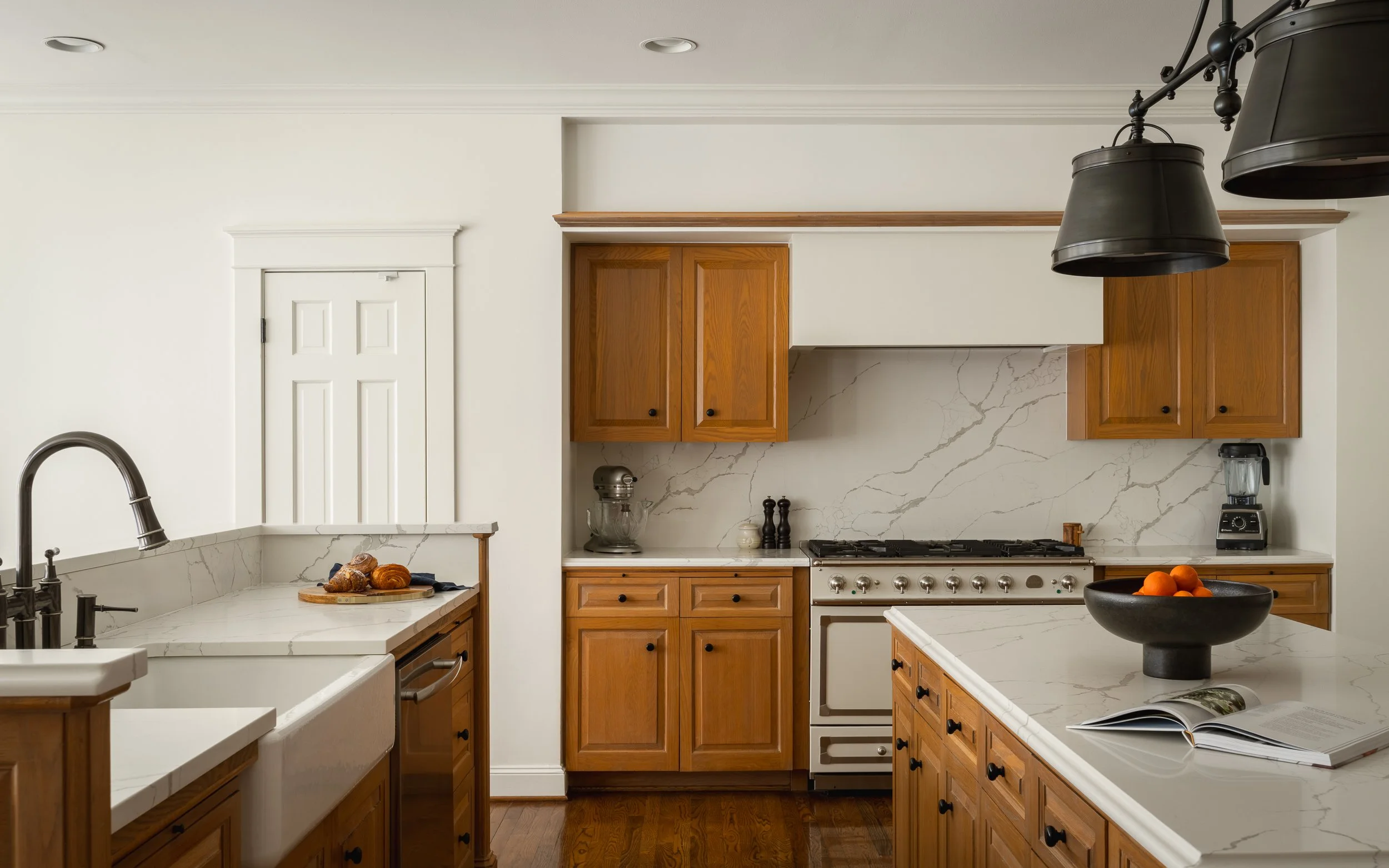
Keeping salt, pepper, garlic, and oils accessible and keeping fruit in a beautiful bowl removes friction from healthier choices
What Do We Mean by Wellbeing?
Within my Joyful by Design framework, Wellbeing asks a simple question: does this home help us thrive? Light affects our circadian rhythm. Sound influences our stress. Air and materials affect how we sleep, think, and recover. For too long this has been treated as a specialty within design — something you opt into if you're already wellness-minded. I think it should be laced into every decisions we make about our homes.
There's a well-established framework for thinking about this rigorously — the WELL Building Standard — and while I don't design usually to a certification, I lean heavily on its evidence based recommendations and expertise. Here are the ones that matter most in a home:
Core Principles and Practical Tips
Air
Use low or no VOC paints. If you need to use an oil based stain have it applied offsite, or at least make sure you ventilate incredibly well in the weeks and months following application. I've been experimenting with lime wash finishes — beautiful, and genuinely good for indoor air.
Choose finishes wisely. American clay plaster actively pulls toxins out of the air rather than just avoiding adding to them
Avoid gas cooktops. Induction cooktops have come a long way — if you're replacing appliances, consider induction over gas; if gas stays, vent it aggressively
Operable windows. Open windows and let in fresh air as much as possible. If you’re worried about bugs then strategically choose a few windows to put screens onto.
Light
Dark nights, sunlit days. Darkness helps you stay asleep, but you need real light exposure in the morning to signal your body to wake up and get moving — build a morning ritual around it: coffee, the paper, yoga, meditation, ideally in a sunny spot or outdoors
Layer lighting. You might need bright overhead lights (it’s usually can lights) for cleaning and other intensive tasks, but day-to-day you should rely mostly on warm, indirect lighting. This ideally includes architectural lighting (such as cover lights or stair lights) and accent lighting like reading lamps and bedside table lamps
Night lights. Avoid bright overhead lights at night, and use them sparingly even during the day
Sound
Implement buffers. When bedroom is adjacent to a space where there will likely be noise, locate closets between the spaces to buffer the sound. If you’re not changing your layout you can still arrange furniture or wall finishes similarly, and make sure walls are well insulated.
Choose materials wisely. Wool, for example, features a naturally crimped, multi-dimensional and porous fiber structure that scatters and traps sound energy significantly better than smooth, uniform synthetic filaments.
Use rugs, window treatments, and furnishings strategically. In large, echo-y spaces, floor to ceiling drapery or a large ottoman may improve acoustics without having to change the shape of the ceiling.
Thermal comfort
Design for convection. Operable windows placed one low, one high, can create cross-ventilation that sweeps out warm air and pulls in cooler air during hot months.
Choose the right shades. Cellular shades let in light without the heat gain, while exterior shading can also keep heat from entering the space without interfering with the view.
Water
Drinking water matters most. Refrigerator door water filtration is good for convenience and some taste improvement, but it is not a full-scale water purifier. It lacks the advanced capability to catch heavy metals or chemical pollutants. Instead, opt for countertop RO systems like AquaTru — no plumbing required, genuinely effective. We can build them into cabinets or pantries.
Investing in whole home. Depending on the water quality in your area, you may consider adding a whole-home water filtration system. On top of making your day-to-day easier, they can prevent mineral and sediment buildup, extending the life of your water heater, laundry machine, and dishwasher.
Point-of-use filters can also work well in specific spots — showers, for instance — where a whole-home system isn't practical
Movement
Can you move through your spaces without tripping on the corner of a rug or bumping into furniture?
Does your space adapt to your needs when entertaining?
Can you safely and comfortably enter and exit your home, your shower, and other features of your home?
Motion-sensor lighting in the rooms where your hands are usually full — mudrooms, stairwells
Nourishment
Plant an herb garden near the kitchen, and grow easy, seasonal fruits and vegetables if you have the space
Keep hens if your space and neighborhood allow it — fresh eggs are surprisingly easy
A beautiful fruit bowl on the counter makes the healthy choice the accessible one
Keep olive oil, sea salt, pepper, and a good beurre de sel out on the counter and within reach — it removes just enough friction that eggs and toast becomes the easy breakfast instead of the effortful one
Mind
Build ritual into the architecture, not just the schedule — a primary bath with nice towels and a calm, uncluttered atmosphere gives you an actual moment to transition
Keep a tea tray in the kitchen — a nice mug, the ritual of tea in the afternoon or evening, is its own kind of pause
Pair a comfortable reading chair with a good reading lamp
Give devices a charging station that's out of sight, so they can disappear during family time
Favor organic materials and solid, well-crafted construction — things built to last quietly reinforce a sense of calm
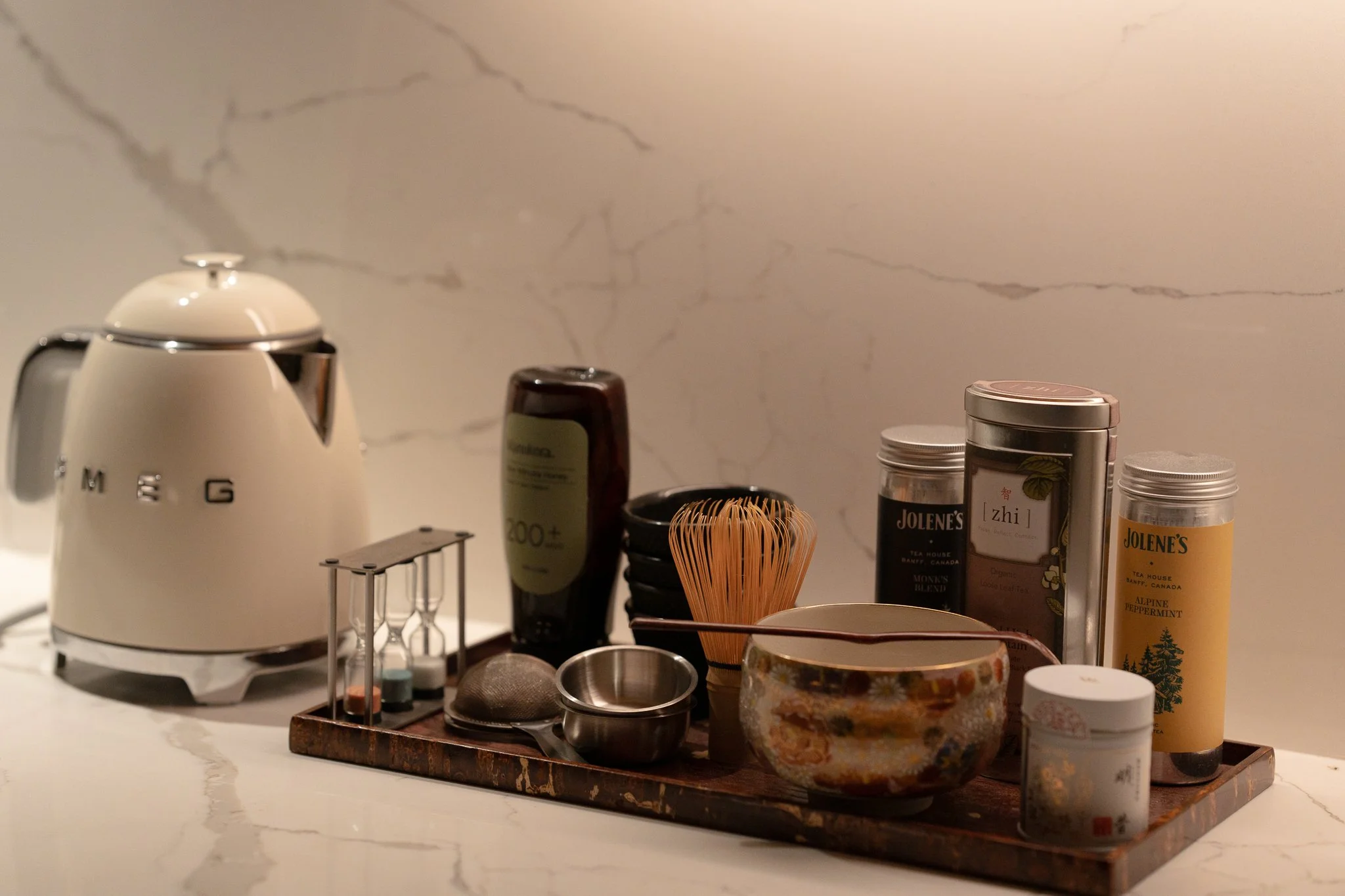
Integrating rituals into your space not only makes it feel more like home, but also improves wellbeing
Invisible Design Is Still Design
You'll never walk into a home and compliment its circadian lighting strategy or the elegance of its ventilation plan. You'll simply notice, over months and years, that you sleep better there, think more clearly there, feel more like yourself there — and most people never trace that feeling back to the decisions that caused it.
That's the point. A joyful home doesn't just reflect who you are or support how you live. It should care for the body that lives inside it as thoughtfully as it cares for the eye. Because the most important things a home gives you are often the ones you'll never think to photograph.